


 Deutsch
  日本語
日本語 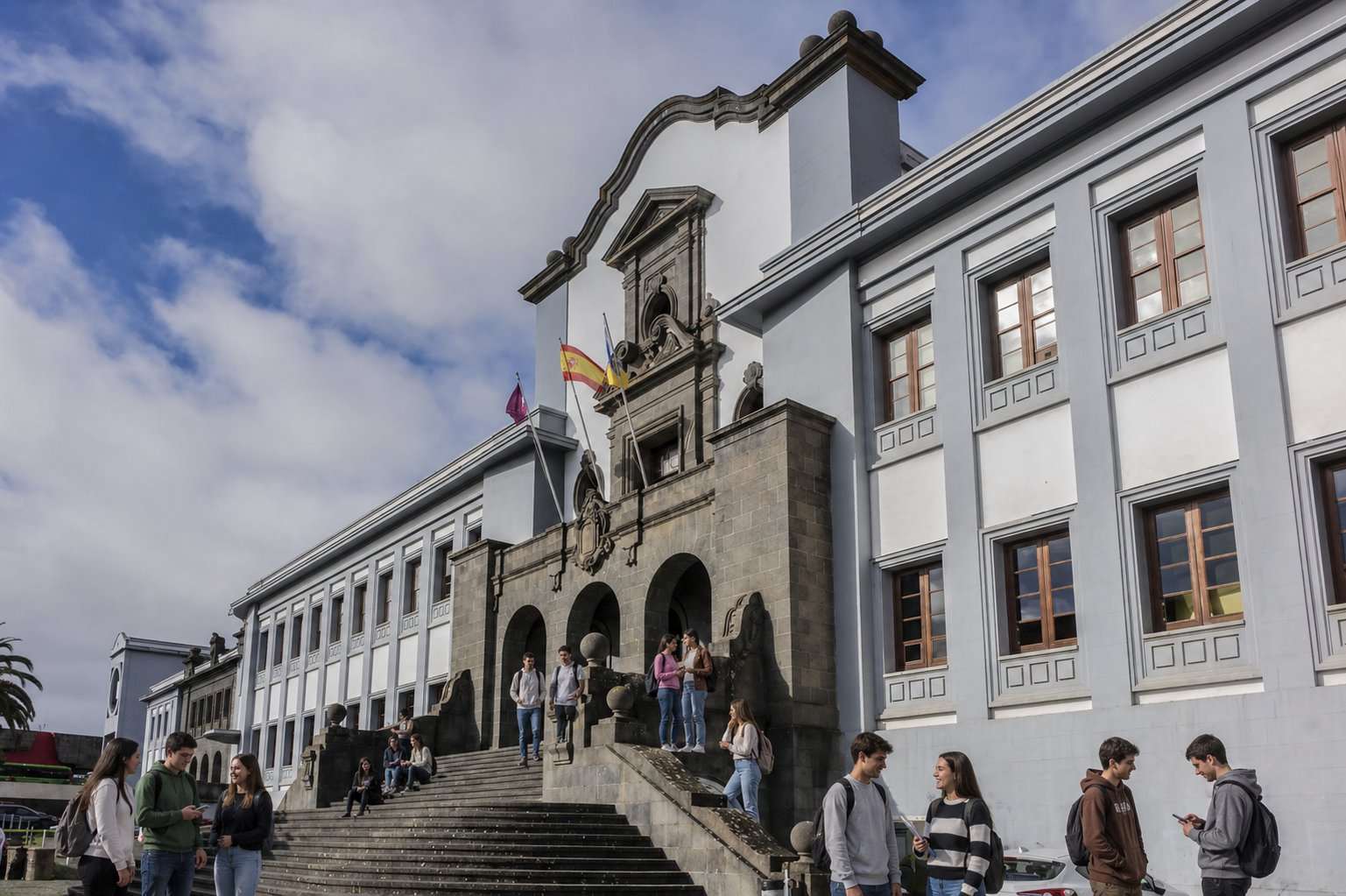
Air You Can Trust
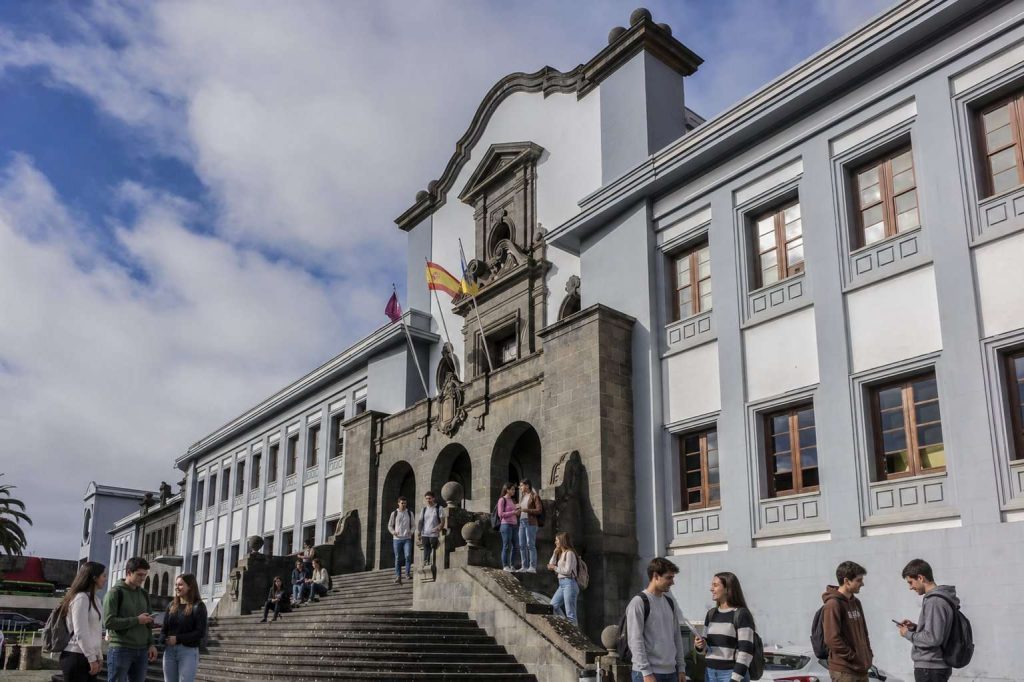
University of La Laguna (est. 1792). Canary Islands. Spain.
Protecting university spaces from the invisible threat of radon
How the University of La Laguna deployed a network of radon and indoor-air-quality sensors across 70 academic and administrative areas — without a single new cable, without one additional network device, and without expanding its attack surface.
Radon is a naturally occurring radioactive gas — colourless and odourless — that accumulates in enclosed spaces and is the second leading cause of lung cancer after tobacco. In the Canary Islands, the volcanic nature of the subsoil pushes potential exposure well above the national average, and the municipality of San Cristóbal de La Laguna is classified as Zone 2 — the highest protection category — under both European (Directive 2013/59/Euratom) and Spanish regulations (CTE DB-HS6, RD 732/2019).
The University of La Laguna — with close to 30,000 people across students, faculty, and staff, and numerous buildings where teaching and administrative activity also takes place on ground floors — chose to go beyond minimum compliance: to put in place a permanent, real-time monitoring infrastructure without disrupting academic activity and without opening new operational fronts on its corporate network.
An IoT network on top of the existing WLAN
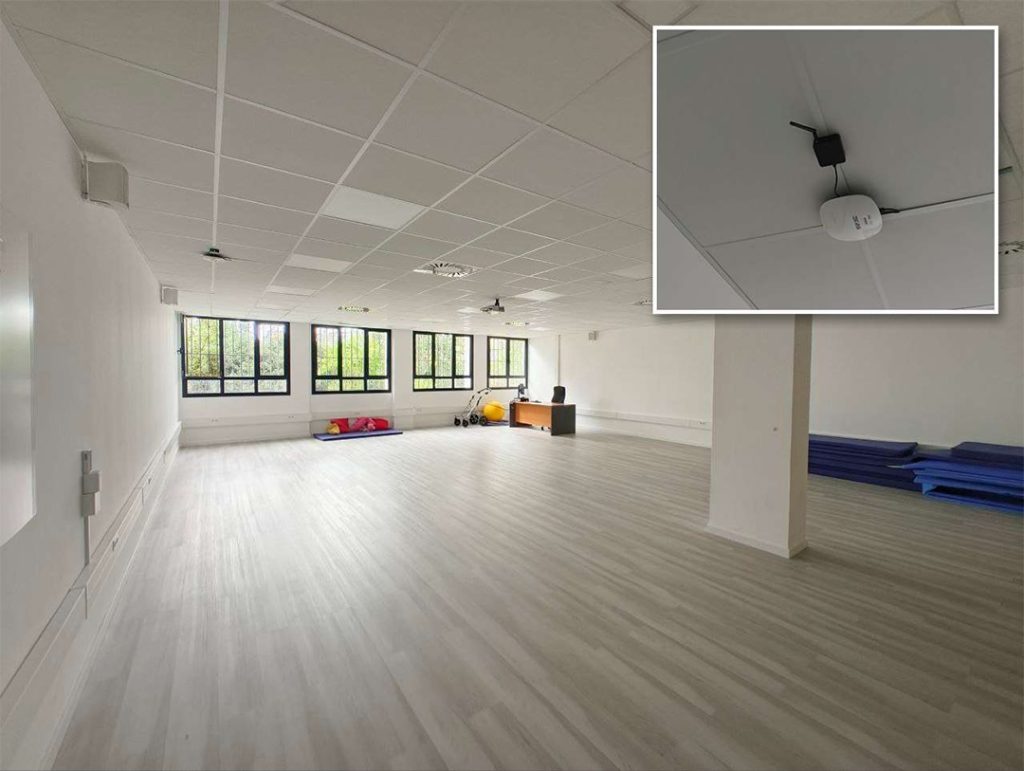
The solution leverages the HPE Aruba WLAN infrastructure already in place across the campus. Thanks to the technology partnership between HPE Aruba and the EnOcean Alliance, plugging an EnOcean USB Gateway into each access point’s USB port is enough to turn it into an 868 MHz IoT coverage cell. The WLAN serves solely as an encrypted transport for the telemetry — it does not share spectrum with the user Wi-Fi network and does not process the IoT data on its own.
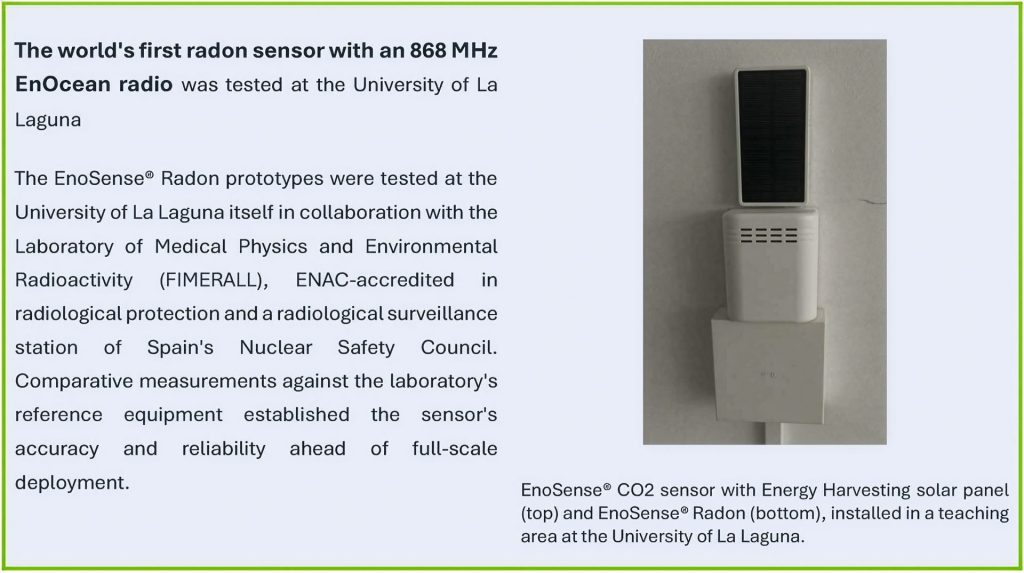
Two Deuta Controls sensors have been installed in each area: the EnoSense Radon — the world’s first radon sensor with an 868 MHz EnOcean radio — and the EnoSense CO2, self-powered through Energy Harvesting (no cells, no batteries, no wiring). Telemetry flows through a secure WSS tunnel to the iWIP DATZN® IoT management platform, a member of the EnOcean Alliance, where it is centrally monitored, visualised and reported.
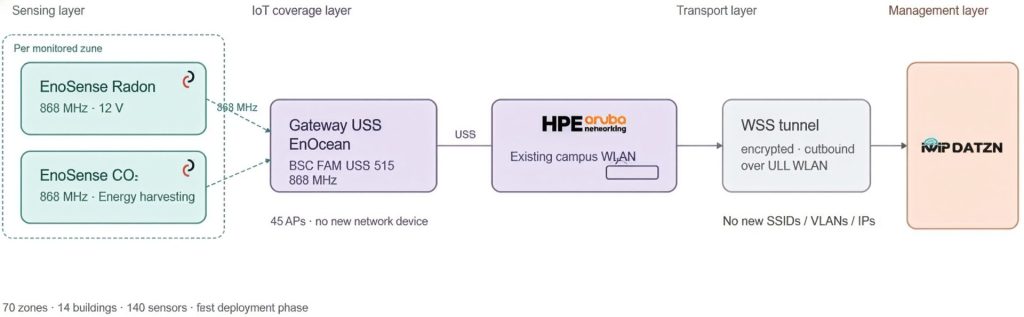
Architecture of the IoT network on top of the existing WLAN infrastructure.
Results and benefits
- 70 monitored areas across 14 campus buildings, with 140 sensors deployed.
- 4-week rollout, aligned with the academic calendar, with an end-to-end installation time of around 30 minutes per area — calibration included.
- 45 HPE Aruba access points enabled as IoT cells via EnOcean USB Gateways, on top of already-existing infrastructure.
- Zero new cabling, zero additional network devices, zero new SSIDs, zero new VLANs, zero new IP addresses, zero exposed services. The University of La Laguna’s network footprint after the project is identical to what it was before.
- Zero impact on the user Wi-Fi network and on academic activity.
- Continuous, traceable readings integrated into day-to-day building operations: radon goes from being a number in a PDF to an observable, manageable variable.
Next steps
The deployed infrastructure covers the first phase of a planned scope of 150 areas across 29 buildings. Expanding it does not require rethinking the architecture: it simply means continuing the rollout at whatever pace academic activity allows. The same model opens the door to adding new environmental parameters — occupancy, particulates, VOCs, noise — on top of the areas already covered, and is replicable in any organisation with an HPE Aruba WLAN: universities, hospitals, public administrations.
What started as a response to a regulatory requirement has become an indoor environmental quality platform with room to grow.
Technology stack: HPE Aruba · EnOcean Alliance · Deuta Controls (EnoSense Radon, EnoSense CO2) · iWIP DATZN · GLOBALAN Telecomunicaciones (local deployment).